
The Minimum Top Up Amount plays a key role in digital payment systems by defining the smallest recharge required to access a service. Whether using a mobile wallet, recharge app, or online platform, the Minimum Top Up Amount ensures users can activate features quickly while keeping transactions simple and secure.
For budget-conscious users, a low Minimum Top Up Amount offers flexibility and instant access without high upfront costs. It is especially useful for students, new users, or anyone testing a service for the first time. Understanding the Minimum Top Up Amount helps users make smarter choices and manage digital spending with confidence.
What Is a Minimum Top Up Amount?
A minimum top up amount is the smallest value a user must add to an account in order to activate or continue using a digital service. This rule is set by service providers to define the lowest recharge they are willing to process. Any amount below this limit is automatically rejected by the system.
The purpose behind setting a minimum limit is mainly operational. It helps platforms manage transaction costs, maintain system efficiency, and avoid losses caused by processing extremely small payments. For instance, if a wallet requires a minimum top up of $5, users must recharge at least that amount to proceed.
Minimum top up limits are not the same across all platforms. Some services support very low entry amounts to attract new users, while others apply higher limits due to infrastructure or service-related costs.
A simple real-world example is prepaid mobile service activation. When a SIM card requires an initial balance before it becomes usable, that required amount represents the minimum top up needed to unlock the service.
Why the Minimum Top Up Amount Is Important for Users
The minimum top up amount plays a crucial role for users who prefer controlled spending. Many people do not want or cannot afford to recharge large sums at once, so a low minimum top up makes services more accessible.
For first-time users, this feature is especially valuable. It allows them to explore a platform without making a big financial commitment. Testing a service with a small amount reduces risk and builds confidence.
Another key advantage is budget flexibility. Users can recharge exactly what they need instead of locking money into unused balances. This supports better expense planning and smarter money habits.
Small recharges also improve spending awareness. When users top up in limited amounts, they naturally track usage more closely, which helps maintain long-term financial discipline.
How a Minimum Top Up Amount Functions
The minimum top up process is designed to be simple and fast. A user begins by opening the app or platform and selecting the recharge or top up option.
The system then automatically displays the lowest amount allowed. The user cannot enter a value below this threshold. After choosing a valid amount, the user selects a payment method such as a card, online transfer, or digital wallet.
Once payment is completed, instant access usually follows. The balance is added immediately, allowing the user to use the service without waiting.
To complete the process, a confirmation message appears on the screen and is often supported by an email or SMS notification. This confirmation ensures clarity and reassures users that the transaction was successful.
Minimum Top Up Amount vs Regular Recharge
A minimum top up and a regular recharge serve different purposes. The minimum top up is designed as a basic entry option, while a regular recharge typically involves a higher amount intended for frequent or long-term use.
Minimum top ups require less money and are ideal for short-term needs or testing. Regular recharges, on the other hand, offer convenience for users who rely on a service consistently.
If a user needs temporary access or wants to explore a service, a minimum top up is usually the smarter choice. For ongoing usage, a higher recharge can reduce the need for frequent transactions.
Both options are useful, and the best choice depends on how often and how heavily a service is used.
Advantages of a Low Recharge Limit with Instant Access
A low recharge limit combined with instant access provides several user-friendly benefits. The most noticeable is immediate service availability, which eliminates waiting time after payment.
Another advantage is reduced financial pressure. Users do not need to invest large amounts upfront, making digital services more inclusive for students and casual users.
Speed and security also stand out. Most minimum top ups are processed quickly using secure payment systems, ensuring both efficiency and safety.
Overall, the combination of low cost, quick processing, and instant usability creates a smooth and stress-free user experience.
Platforms That Commonly Support Low Minimum Top Ups
Many modern platforms now support low minimum recharge options to attract a wider audience. Digital wallets are a prime example, allowing users to start with minimal balances.
Mobile recharge applications also offer small top up values so users from different income levels can stay connected.
Online services such as subscriptions, tools, and digital products often provide entry-level recharges to encourage first-time usage.
Across the industry, low minimum top ups have become a strategic way to improve accessibility and user adoption.
Security and Safety Awareness
Security should always be a priority when performing any recharge. Users should rely only on platforms that use secure payment technology and encrypted transactions.
Choosing reputable services significantly reduces the risk of fraud. Unknown or unverified platforms can compromise both funds and personal data.
It is also important to review privacy policies and understand how user information is handled. Transparency is a sign of a trustworthy service.
Avoid suspicious promotions or deals that promise unrealistically low recharge limits. Staying informed is the best protection against scams.
How to Choose the Best Minimum Top Up Option
To select the right minimum top up, users should first compare available platforms and understand their limits and conditions.
Checking for hidden fees is essential, as some services add extra charges that increase the final cost.
User reviews provide valuable insight into reliability and service quality, making them an important decision tool.
A smart approach is to recharge only what is necessary and always use trusted platforms to ensure secure and reliable transactions.
Benefits of Lowest Recharge Limit with Instant Access
Offering the lowest recharge limit with instant access comes with several advantages:
✔ Instant Activation
Users don’t have to wait after making a payment — the balance is added immediately so services can be used right away.
✔ No Heavy Investment Required
Not everyone wants to add a large sum of money at once. With a low minimum top up, even users with limited funds can access digital services easily.
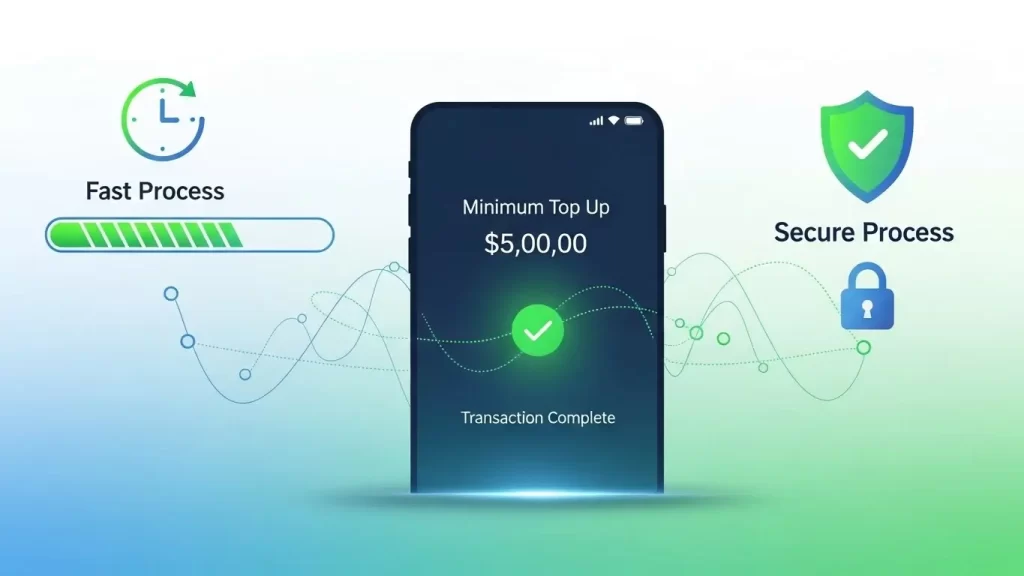
✔ Fast and Secure Process
Minimum top up transactions are typically quick and use secure payment gateways, offering both speed and safety in transactions.
✔ Enhanced User Convenience
Low cost + instant access + secure processing combine to make the user experience smooth and hassle-free. This convenience is one of the main reasons users prefer platforms with low minimum top up limits.
Common Platforms That Offer Low Minimum Top Up Amount
Several platforms today offer low minimum top up amounts to attract and retain users:
Digital Wallets
Popular digital wallets often allow very small recharges so users can quickly add funds for payments, transfers, and online purchases.
Mobile Recharge Apps
Mobile networks or third-party apps provide minimum recharge options, enabling users with varying budgets to stay connected.
Online Subscription Tools
Many online services — from streaming to gaming — offer entry-level recharges to encourage users to start with minimal cost and upgrade later.
The industry trend shows that offering low minimum recharge options helps increase adoption, engagement, and overall user satisfaction.
Faqs
What is the minimum top up for a nol card?
Starting from 1st March 2025, the minimum top-up amount for each nol card is AED 20 at the Ticket Vending Machine (TVM) in all Metro Stations.
What is the minimum balance in Hafilat card?
The minimum balance for a Hafilat card depends on the card type, but generally, you need at least AED 5 to AED 10 to start a trip, with specific cards like Senior or Student cards requiring less (around AED 5), while standard Personalized or Anonymous cards might have a higher initial requirement or a AED 5 minimum for boarding. You must have sufficient funds for the trip, as boarding is blocked if the balance falls below the minimum required to start the journey, typically AED 5.
What is the minimum balance in UAE current account?
Minimum balance requirements of AED 3,000. Minimum salary of AED 5,000. Available to individuals and businesses including sole proprietorships, partnerships as well as Joint Stock and Limited Liability organizations.
Does Emirates NBD need minimum balance?
For Executive package, minimum monthly salary transfer to be AED 5,000 and minimum monthly average relationship balance to be AED 100,000. For UAE National package customers, there is no minimum monthly average relationship balance or minimum monthly salary requirement.
Is minimum balance required for adcb?
The minimum balance requirement for an ADCB Savings Account is 5,000. The minimum balance requirement for a foreign currency Savings Account is USD 1,500 or its equivalent in other currencies. A monthly fee will be applicable if the respective segment-wise relationship balance criteria is not met.
Which bank has a 500 minimum balance?
Minimum Balance of Top Banks
Bank
Zero-Balance Account
Minimum Balance
ICICI Bank
Not available
Rs.1,000 for gramin branches & Rs.2,000 for rural branches
Axis Bank
Not available
Rs.2,500
Bank of Baroda
Not available
Rs.500
IDFC First Bank
Not available
Rs.10,000 or Rs.25,000, depending on your choice
Conclusion
The Minimum Top Up Amount is a crucial feature of digital payment and recharge systems, offering users flexibility, convenience, and controlled spending. By setting a clear minimum recharge, platforms ensure smooth operations while allowing users—especially students, new users, or casual spenders—to access services without committing large sums upfront. Low minimum top ups make digital services more inclusive and user-friendly, promoting wider adoption and easier financial management.
Choosing the right platform for minimum top up is equally important. Users should prioritize secure, trusted services that provide transparent limits, minimal fees, and instant access. By understanding how minimum top up amounts work and comparing options, individuals can enjoy seamless transactions, better budget control, and safe usage across wallets, recharge apps, and online platforms.